
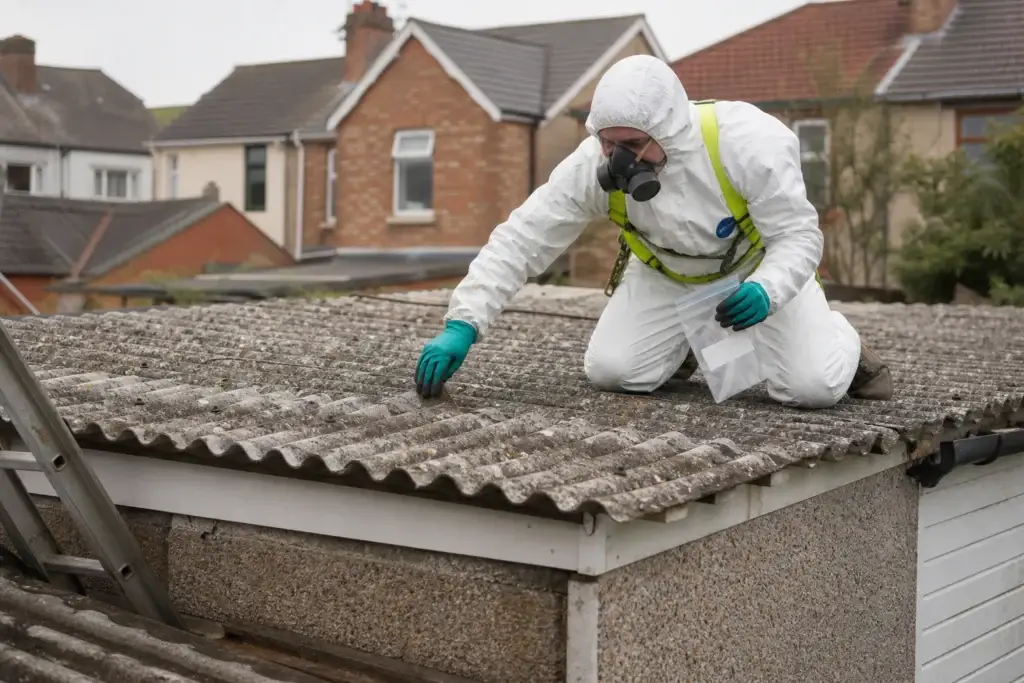
If your garage roof is old enough to be made from asbestos cement, the safest approach is not to assume either way. A weathered sheet, a corrugated profile or a grey finish may look familiar, but none of those details confirm what the material is.
That matters because the right next step before replacement is usually based on condition, material type and how much the roof will be disturbed. In some cases, the sensible move is to have the roof sampled before any work begins. In others, it may be clearer to arrange removal and disposal through a specialist who can assess the material properly.
North East Asbestos Removal helps homeowners, landlords, trades and businesses with asbestos testing, collection, disposal and appropriate non-licensed asbestos work across North East England and surrounding areas.
What can make a garage roof suspicious?
Many older garages were built with cement-based roofing sheets that can contain asbestos. If you are looking at an older outbuilding, the following details may be worth noting:
- corrugated sheets on a garage roof or lean-to
- fibre cement-style panels that appear hard and brittle
- weathered sheets with moss, staining or surface wear
- patch repairs, drilled holes or broken edges
- an older garage roof that has never been replaced
These features do not prove the presence of asbestos, but they do suggest that further checks may be sensible before you start removing fixings, lifting sheets or booking a replacement contractor.
It is also worth remembering that a roof can still contain asbestos even if it looks sound. Equally, a damaged sheet does not automatically mean it is unsafe to leave in place. The risk depends on the material, its condition and whether it is likely to be disturbed.
Why visual checks are not enough
People often want a quick answer based on a photo or a glance from the garden, but appearance alone is not reliable. Older asbestos cement roofing can look very similar to non-asbestos cement products. Age helps narrow things down, but it still does not confirm anything.
That is why garage roof asbestos testing can be useful. Sampling gives you a clearer answer before you commit to a repair or replacement job. It can also help you avoid unnecessary work if the roof is confirmed to be a non-asbestos material.
If you are planning work anyway, a proper check early on can save hassle later. It is much better to identify the material before a roofer, builder or homeowner starts drilling, breaking or stripping the roof.
When testing may be the right next step
Testing is often sensible when:
- the garage roof is old and you are unsure what it is made of
- you are planning replacement and want to know what you are dealing with
- the sheets are in reasonable condition and sampling can be arranged with minimal disturbance
- you need clarity before organising disposal or contractor work
If the material is already damaged, loose or weathered, the decision may move beyond testing alone. In those cases, specialist advice is often more useful because the priority becomes safe handling, controlled removal and lawful disposal.
If you are unsure whether your roof should be tested, removed or simply left alone for the time being, this guide on what to do if an old garage roof needs replacing and you suspect asbestos may help.
What to do before any replacement work starts
If you suspect asbestos, avoid drilling, cutting, breaking or pulling at the sheets. Even where a roof is made from asbestos cement, the way it is handled matters. Unnecessary disturbance is what can increase the chance of fibre release.
A practical next step is to pause the job and decide whether the roof needs testing, collection or removal. This is especially important if other trades are due on site or if the garage is attached to a house, outbuilding or shared boundary.
If the roof is confirmed as asbestos cement, some work may fall within non-licensed asbestos work, depending on the material, its condition and the job involved. That does not mean it is a simple DIY task, and it does not mean every asbestos roof can be tackled in the same way.
For a broader explanation of how different materials are assessed, see how to decide whether a suspected asbestos material needs testing, collection or removal.
What happens if the roof does contain asbestos?
If sampling confirms asbestos, the next step depends on the roof’s condition and what you are planning to do with the garage. In some cases, the roof may be a candidate for controlled removal as part of a planned replacement or demolition. In others, there may be a better short-term decision while you organise the broader project.
North East Asbestos Removal can advise on suitable next steps, including asbestos garage roof removal, garage demolition where asbestos cement roofing is present, and asbestos collection and disposal where the material has already been taken down or prepared for uplift.
If you want to understand the removal side in more detail, you may also find this useful: Asbestos garage roof removal done safely.
The safest way to avoid guesswork
The main thing to remember is simple: do not rely on appearance alone. If a garage roof is old, brittle or due for replacement, a quick visual check can only take you so far. Testing or professional advice is often the clearest way to avoid disturbing the material unnecessarily.
If you are dealing with an older garage roof in North East England and are not sure what you are looking at, North East Asbestos Removal can help with practical advice, testing and the right next step for your situation. Call 01642 054698 or email hello@northeastasbestosremoval.co.uk.