
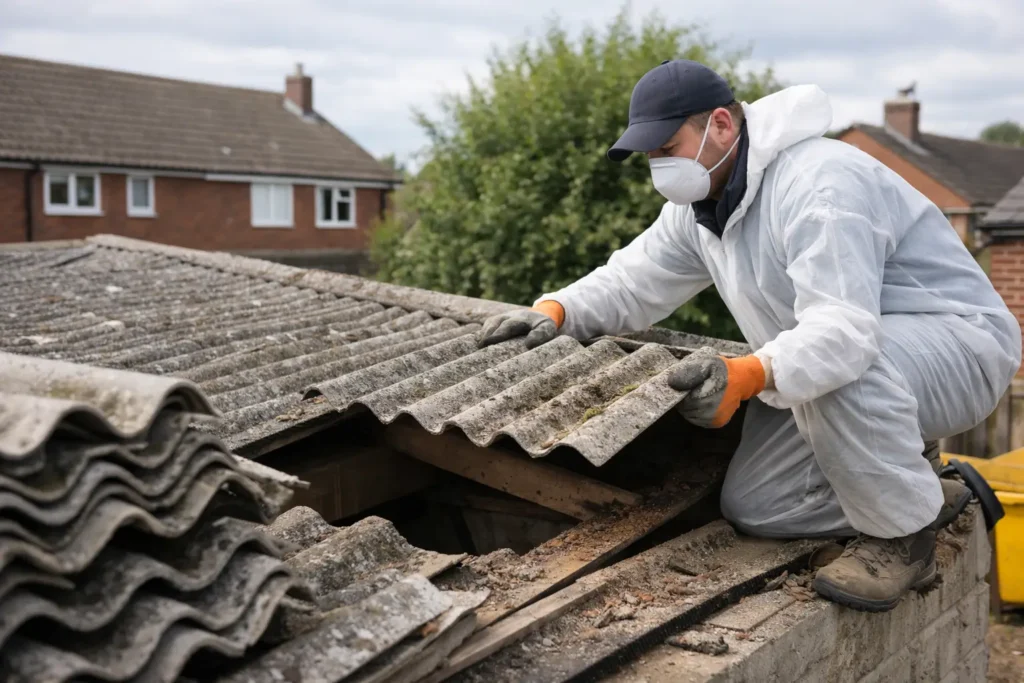
A cracked corrugated garage roof can make a renovation feel urgent. But before lifting a single sheet, ask: can you remove asbestos cement roof yourself without creating a greater risk for your household, neighbours or anyone handling the waste? In most cases, the safer and more practical answer is to arrange professional removal.
Asbestos cement was widely used on garages, sheds, workshops, outbuildings and farm structures. It can look like ordinary grey corrugated roofing, and when it is intact, the asbestos fibres are bound into a hard cement matrix. That does not make it harmless. Once sheets are drilled, snapped, dropped, cut or allowed to deteriorate, fibres can be released into the air.
Can you remove an asbestos cement roof yourself?
A homeowner may be tempted to treat an old asbestos cement roof as a straightforward demolition job. It is not. The risk depends on the roof’s condition, its height, how it is fixed, whether it has already been damaged and how the sheets will be moved and disposed of.
Asbestos cement is generally less friable than materials such as pipe insulation or loose-fill insulation, because the fibres are mixed with cement. However, roofing sheets often become brittle with age. A sheet that appears solid from below may crack around bolts, along overlaps or at the edges when weight and pressure are applied. Breaking one sheet can turn a contained material into contaminated debris across a garden, driveway or neighbouring property.
There is also the fall risk. Old garage roofs may be weak, wet, moss-covered or poorly supported. No asbestos removal decision should overlook the danger of falling through a roof or dropping heavy, awkward sheets while working at height.
For these reasons, removal is best left to a trained asbestos contractor with a planned method of work, suitable protective equipment, controlled handling procedures and a clear route for lawful disposal. The aim is not simply to get the roof down quickly. It is to get the job done right without spreading contamination.
Why an asbestos cement roof needs careful handling
The greatest danger is usually not the roof sitting undisturbed. It is disturbance. DIY removal can go wrong when people use power tools, sweep dust, break sheets into manageable pieces or pile materials into an open skip. These actions can release fibres and make proper clean-up far more difficult.
A professional assessment considers more than whether the sheets contain asbestos. It also looks at access, surrounding homes, vehicles, gardens, power lines, the roof structure and the condition of the fixings. A detached garage at the end of a clear driveway is a different job from a fragile lean-to roof beside a neighbour’s fence or a commercial outbuilding with staff working nearby.
The removal plan should reduce breakage, control the work area and prevent anyone unrelated to the job from entering it. Once the roofing is removed, the underlying timber, guttering, soil and nearby surfaces may also need checking for debris. A rushed job can leave small fragments behind long after the visible sheets have gone.
The legal and disposal issue is just as important
Asbestos waste cannot go into your normal household bin, a general builders’ skip or mixed construction waste. It must be packaged, transported and taken to an authorised disposal facility in line with the relevant requirements.
This is where many DIY projects become expensive and stressful. Not every household waste site accepts asbestos cement, and sites that do may have strict booking, quantity, packaging and vehicle rules. These arrangements can vary between local authorities. Turning up without confirming the process can mean being refused with hazardous material still in your vehicle.
Landlords, tradespeople, property managers and businesses have further responsibilities. Before work starts, asbestos should be properly identified and the risks assessed. A contractor or employee should not be asked to remove suspect roofing sheets without the right information, planning and controls in place. For commercial premises, this forms part of managing asbestos responsibly and protecting people who may be affected by the work.
A proper removal service manages collection, secure transport and disposal as one process. That gives you a clear chain of responsibility rather than leaving you to solve the waste problem after the roof is already off.
When a professional removal service is the clear choice
There are situations where arranging specialist help is not merely the preferable option but the sensible one. This includes roofs that are visibly damaged, heavily weathered, difficult to access or close to occupied buildings. It also applies where there is a large quantity of sheeting, a shared boundary, a tight urban site or any sign that pieces have already fallen to the ground.
Professional removal is especially valuable when the roof is part of a wider garage demolition project. Removing the sheets is only one stage. The structure may need to be dismantled safely, waste separated correctly and the site left clean for a replacement garage, landscaping or sale preparation.
North East Asbestos Removal can assess asbestos cement garage and outbuilding roofs, explain the work required and provide a clear estimate before removal begins. Photographs can often help with an initial assessment, particularly where customers need a quick indication of likely scope and access requirements.
What a safe removal process should include
A dependable contractor will begin by confirming what material is present. Age, appearance and previous records can suggest asbestos, but testing may be needed where there is uncertainty. Assumptions are not a substitute for identification, particularly if the building has been altered over the years.
The work should then be planned around the property. This means deciding how the area will be controlled, how the roof can be handled with minimal disturbance, where materials can be safely placed and how they will leave the site. Occupants, neighbours and other trades should know when work is taking place and should be kept away from the work area.
Removal itself should be controlled rather than destructive. The objective is to preserve the sheets as far as possible, avoid dust-producing activities and collect all associated debris. Once loaded for transport, asbestos waste should be contained securely and taken through the correct disposal route.
Finally, the contractor should leave the site in a safe condition. That may include checking the area below the roof, clearing visible fragments and ensuring no asbestos waste has been left in gutters, borders or access routes. If demolition is part of the project, the remaining structure should be made safe before other works begin.
Do not rely on appearance alone
Corrugated cement roofing is often assumed to be asbestos cement if it was installed before 2000, but appearance and age alone cannot provide certainty. Some later replacement sheets are asbestos-free, while older buildings may contain asbestos in more than one place. A garage roof could sit above asbestos-containing wall panels, rainwater goods, insulation board or flooring.
If you are planning repairs, a sale, demolition or a new roof, identify the material before anyone starts work. This protects roofers, builders, family members and future occupants from an avoidable exposure. It can also prevent a contractor arriving to replace a roof, discovering suspect sheets and having to stop the whole project while arrangements are made.
A better first step than DIY removal
If you have a suspected asbestos cement roof, leave it undisturbed while you arrange advice. Do not pressure wash it, drill into it, remove bolts, sweep debris or ask a general waste company to take it away without confirming that they are equipped to handle asbestos waste.
Take clear photographs from ground level if it is safe to do so, noting the building type, approximate roof size, condition and access. A trained local contractor can use that information to advise whether sampling is needed and what controlled removal is likely to involve. For properties across the North East and Yorkshire, this can turn an uncertain, high-risk job into a planned project with a clear cost and timescale.
A roof replacement should give you peace of mind, not leave you wondering whether hazardous debris has been spread around your property. Getting informed advice before work starts is the safest way to move the project forward.