
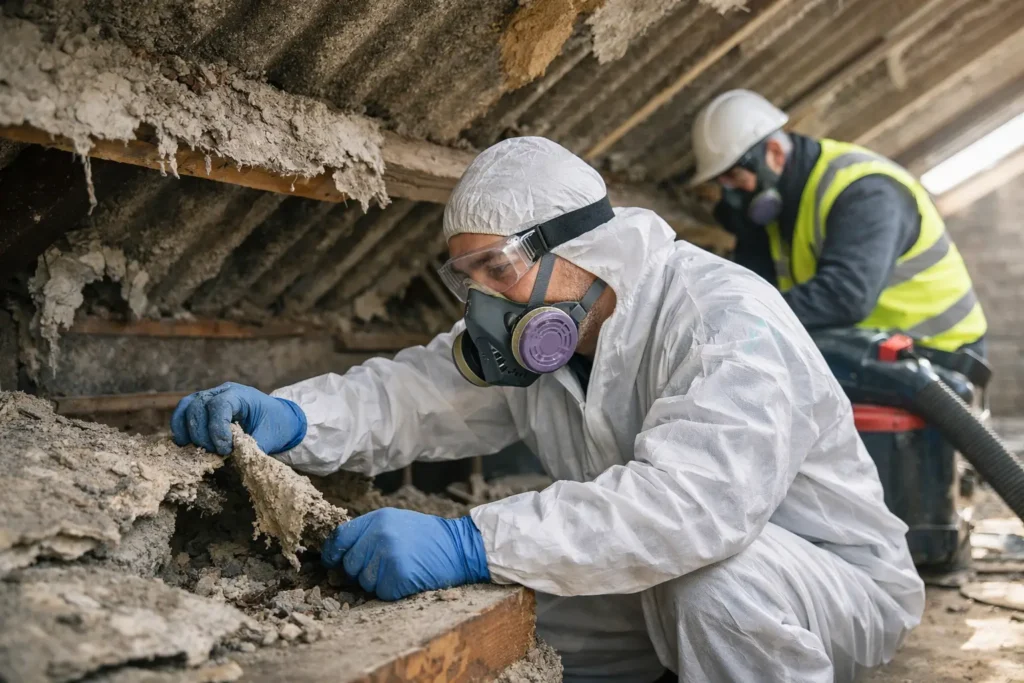
A cracked garage roof, crumbling pipe covering or damaged ceiling coating can turn a routine repair into a safety issue very quickly. The key signs asbestos needs professional removal are usually linked to damage, disturbance or planned building work, rather than simply the age of the material. If you suspect asbestos, stop work, keep the area undisturbed and arrange a professional assessment before cutting, drilling, scraping or moving anything.
Asbestos was used widely in UK buildings for decades, particularly in garages, outbuildings, heating systems, ceilings and flooring. It is not always obvious by sight alone, and a material that looks harmless can release fibres if it is broken up or handled incorrectly. A clear plan protects the people using the property and avoids turning a manageable job into unnecessary contamination.
When asbestos needs professional removal
Asbestos-containing material does not automatically need to be removed the moment it is found. Where it is in good condition, securely fixed and unlikely to be disturbed, careful management may be the sensible option. However, removal becomes the safer course where the material is deteriorating, accessible or likely to be affected by work on the building.
The material is damaged, worn or breaking apart
Damage is one of the clearest warning signs. Look for cracked corrugated garage sheets, broken cement panels, frayed insulation, flaking textured coatings, lifting floor tiles or debris beneath a damaged surface. Weathered asbestos cement roofs can become more fragile over time, especially around fixings, roof edges and overlaps.
Do not sweep up fragments, use a domestic vacuum or pressure-wash a suspected asbestos roof. These actions can spread dust and contaminate nearby surfaces. Keep people away from the affected area where possible and leave the material in place until it can be assessed.
Renovation, repair or demolition will disturb it
Many asbestos problems only come to light when a property is being altered. Replacing a garage roof, removing an old boiler, rewiring, fitting downlights, stripping out a kitchen or demolishing an outbuilding can all disturb hidden materials.
This is particularly relevant for landlords, tradespeople and property managers arranging work in older buildings. Before the first hole is drilled or a wall is opened, suspected materials should be checked. A survey or targeted sample gives you a basis for planning the work safely, rather than relying on assumptions made from appearance.
Pipe insulation, lagging or loose material is exposed
Some asbestos-containing materials are more easily damaged than others. Pipe insulation, boiler insulation, loose-fill insulation and certain older ceiling or wall finishes can release fibres more readily if they are disturbed. If insulation is torn, exposed in a loft or service cupboard, or has been knocked during maintenance, it needs prompt professional attention.
The same applies where old boxing around pipes has been removed or broken, revealing fibrous insulation underneath. Do not try to wrap it in household materials or remove it yourself. Restrict access and arrange an assessment so the correct controls can be put in place.
There are repeated leaks, impact damage or weather exposure
A leaking roof, burst pipe or storm damage can affect asbestos-containing materials even if they were previously in reasonable condition. Water can weaken old boards and ceiling coatings, while wind damage can crack roof sheets or dislodge sections from garages and sheds.
A damaged asbestos cement roof may still look broadly intact from ground level, but broken fixings, cracking and loose sections can make removal safer than repeated patching. The right decision depends on the roof’s condition, its location and whether repair work would involve handling or drilling through the sheets.
The material is in an area people regularly use
Condition matters, but so does location. A suspected asbestos panel high in a locked plant room presents a different risk from damaged floor tiles in a busy shop, a crumbling ceiling in a rental property or broken garage sheets beside a driveway.
Removal is often appropriate when material is easily accessible to children, tenants, customers or maintenance staff. For commercial premises, acting early also helps meet the duty to manage asbestos and reduces disruption if emergency repairs are needed later.
Signs asbestos needs professional removal before property work
Selling a house, preparing a rental property or improving a commercial unit often brings old materials into focus. It is tempting to remove dated Artex, old floor tiles or a garage roof as part of a quick refurbishment. The risk is that seemingly straightforward work may disturb asbestos before anyone has established what it contains.
Textured coatings, including some Artex ceilings, cannot be confirmed as asbestos-free by appearance. The same is true of vinyl floor tiles and their adhesive, cement sheets, soffits, flues and insulation boards. Sampling by a competent specialist is the practical first step when the material is intact but work is planned nearby.
If a sample confirms asbestos, the removal method should match the material and the task. A small, well-defined area may need a different approach from a full garage demolition or widespread pipe insulation removal. Good planning keeps the work proportionate while maintaining proper protection, containment and waste handling.
What to do if you suspect asbestos
The first response should be calm and simple. Stop any work that could disturb the material and do not break, sand, drill, scrape or pull it away. Keep other people out of the immediate area, especially if there is visible debris or damage.
Take clear photographs from a safe distance if this can be done without touching or moving anything. Images can help a specialist understand the likely material, its condition and the scale of the job before attending. They do not replace testing, but they can make a quote and initial advice much quicker.
Next, arrange testing, sampling or a survey as appropriate. For a single suspicious item, such as a garage roof sheet or ceiling coating, targeted sampling may be enough. For refurbishment, demolition or a larger property with several possible materials, a more detailed survey can identify what is present and where it is located.
Avoid asking a general waste collector to take away suspect sheets, tiles or insulation. Asbestos waste must be packaged, transported and disposed of correctly. Improper disposal can create a risk for others and leave the property owner responsible for resolving it.
What professional removal should look like
A professional asbestos removal job starts with identifying the material and assessing its condition, location and the work required. The aim is not to use a one-size-fits-all method, but to control the risk properly and complete the job with as little disruption as practical.
For removal work, the area is planned and prepared to prevent spread beyond the work zone. Depending on the material, this can include controlled access, protective equipment, careful wetting methods and a fully enclosed working area. Materials are removed in a controlled way, securely packaged and taken for correct disposal.
The property should not be left with broken remnants, loose debris or an unclear next step. A well-managed service also covers site clean-up, safe transport and clear communication about the work completed. This matters just as much for a homeowner clearing an old garage as it does for a property manager coordinating work across occupied premises.
North East Asbestos Removal provides end-to-end support for asbestos testing, surveys, removal, collection and disposal across the North East and Yorkshire. Whether the issue is a damaged garage roof, pipe insulation, old floor tiles or a textured ceiling, a clear assessment helps you make the right decision without guesswork.
Removal or management: making the right call
Removal is not always the only safe answer. Sound, sealed asbestos-containing material that will not be disturbed can sometimes be managed through monitoring, labelling where appropriate and keeping a record for future maintenance. This can be less disruptive and more cost-effective than removal.
That approach stops being suitable when the material deteriorates, becomes exposed or sits in the path of planned work. Trying to save money by carrying out an informal repair can create a larger problem, particularly with old roofs, insulation and fragile boards. The safest option depends on the material, its condition and what needs to happen around it.
If something in your property looks damaged or is about to be disturbed, treat uncertainty as a reason to pause rather than press on. A professional assessment gives you a practical route forward and the reassurance that the job can be handled safely from the first inspection to final disposal.