
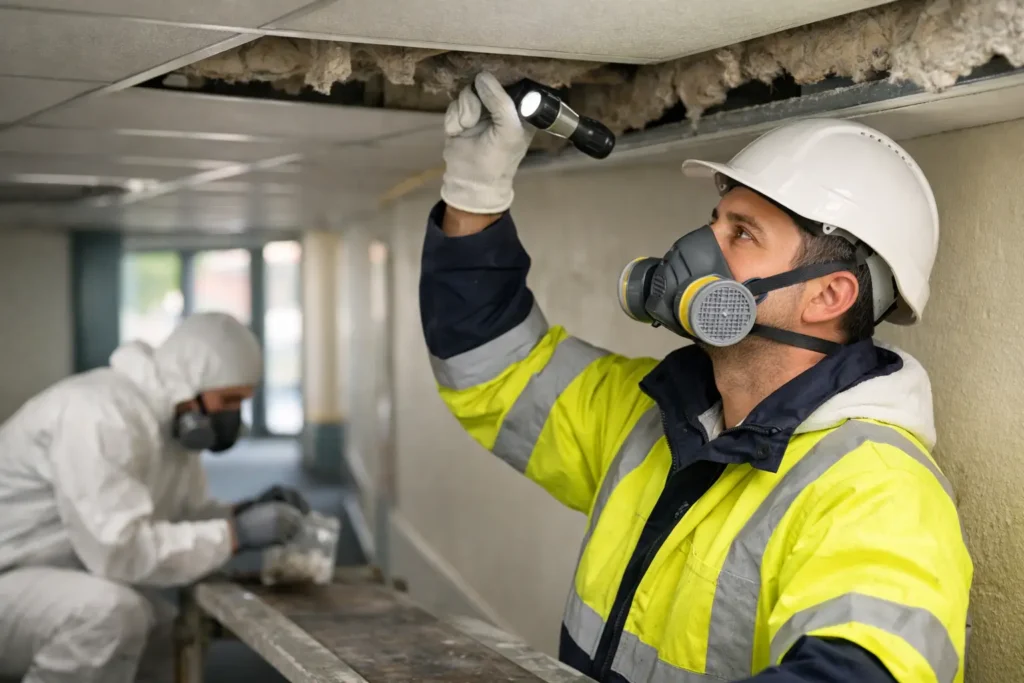
A damaged ceiling tile above a shop floor, an old boiler-room pipe or a planned office refurbishment can quickly become a serious responsibility. Commercial asbestos compliance is about knowing where asbestos may be, preventing anyone from disturbing it, and taking the right action before work begins. Done properly, it protects staff, visitors, contractors and the day-to-day running of your premises.
For landlords, facilities managers and business owners, the aim is not to turn every suspected material into an emergency. It is to make informed decisions, keep clear records and bring in trained asbestos specialists when the condition, location or planned work creates a risk.
Who is responsible for commercial asbestos compliance?
In most non-domestic premises, the duty to manage asbestos sits with the person or organisation responsible for maintenance and repair. This may be the building owner, a commercial landlord, a managing agent or a tenant under the terms of a lease. In shared buildings, responsibility can be split, so it is sensible to establish this clearly rather than assume another party is managing the issue.
The duty applies to offices, shops, warehouses, workshops, communal areas of flats, schools, surgeries and many other business premises built or refurbished before asbestos use was banned. It also applies when you are arranging repairs, maintenance, alterations or demolition.
A dutyholder does not need to carry out technical asbestos work personally. They do need to make sure the risk is assessed, information is available to anyone who may disturb asbestos, and appropriate management or removal is arranged. If a contractor drills through a ceiling, lifts floor tiles or accesses pipework without being told about known asbestos, the consequences can extend far beyond a delayed job.
Start with an asbestos survey that suits the work
A survey gives you the information needed to manage asbestos safely. The right type depends on how the building is used and what work is planned.
A management survey is generally used to locate, as far as reasonably practicable, asbestos-containing materials that could be damaged or disturbed during normal occupation and routine maintenance. It helps form the basis of an asbestos register and management plan.
A refurbishment or demolition survey is more intrusive. It is required before major refurbishment, structural changes or demolition in the relevant areas. Surveys of this type may involve opening up voids, lifting finishes and inspecting concealed areas. The area being surveyed will usually need to be vacant and controlled while this takes place.
Using a management survey as permission to begin a strip-out or renovation project is a common and avoidable mistake. The level of inspection must match the level of disturbance. A building may look straightforward from the outside, yet contain asbestos in floor tiles, textured coatings, cement panels, pipe insulation, soffits, ducting or older service areas.
Where a material is uncertain, sampling and laboratory analysis provide a clear answer. Avoid scraping, breaking or taking samples yourself. Even a small disturbance can release fibres and make a contained issue harder to manage.
Keep an asbestos register people can use
A survey report should not be filed away and forgotten. Its findings need to be translated into an up-to-date asbestos register that identifies the location, condition and management action for known or presumed asbestos-containing materials.
The register should be available before maintenance work starts. This includes visiting tradespeople as well as your regular contractors. A simple check at the quotation or work-order stage can prevent an engineer, electrician or installer from unknowingly disturbing a material behind a panel or above a suspended ceiling.
Records should be reviewed when the building changes, when materials are damaged, and following removal work. If a section has been removed, update the register so old information does not create confusion later.
Manage in place or arrange removal?
Asbestos does not always need to be removed immediately. A sound, sealed material in a location where it will not be disturbed may be safer to manage in place, provided it is recorded, labelled where appropriate and inspected at suitable intervals.
Removal is often the right option where a material is damaged, deteriorating, easily accessible or likely to be disturbed by planned works. It may also be the practical choice when a property is being refurbished, reconfigured for a new tenant, or prepared for demolition. The decision depends on the material, its condition, its location and the proposed activity around it.
For example, intact asbestos cement sheeting on an out-of-the-way external store may be managed while it remains in good condition. The same material on an ageing garage roof due for replacement needs a planned removal process before roofing work begins. Similarly, older floor tiles may remain undisturbed beneath a new covering, but they should not be lifted casually during a fit-out.
A competent contractor will assess the scope, explain the safest practical route and plan the work around your operational needs. North East Asbestos Removal can manage identification, removal, transport and disposal as one coordinated service, helping commercial customers avoid gaps between survey findings and site action.
Plan work before contractors arrive
The most disruptive asbestos problems usually begin with rushed maintenance. A leak needs fixing, a tenant wants a new layout, or a contractor arrives to install equipment and discovers a suspect board or coating halfway through the job. Stopping at that point is necessary, but it can affect timescales, access and costs.
Good commercial asbestos compliance builds asbestos checks into the planning stage. Before approving work, establish what the asbestos register says about the area. If information is missing, incomplete or unsuitable for the planned task, arrange further inspection or a refurbishment survey first.
Your plan should set out who needs asbestos information, how the work area will be controlled, and what happens if unexpected material is found. Staff should know not to disturb suspect materials and to report damage promptly. Contractors should understand that work must stop if they uncover a material not covered by the survey or register.
For removal projects, a clear schedule can reduce interruption. Work may be arranged around quieter trading hours, vacant units or phased areas where practical. However, safety controls must lead the decision. Trying to keep a space open when the work requires restricted access is not a worthwhile trade-off.
What safe asbestos removal involves
The exact method varies with the material and risk, but professional asbestos work is planned well before removal starts. The team assesses the site, establishes suitable controls and prevents unauthorised access to the work area.
Where needed, work is carried out within a fully enclosed area using appropriate protective measures and controlled techniques to minimise fibre release. Materials are carefully removed, packaged and transported for disposal through the proper waste route. The area is then cleaned and checked in line with the requirements of the job before normal access is restored.
This is why using general labour to remove suspect sheets, tiles or insulation is a poor economy. The visible material is only part of the job. Safe handling, containment, cleaning, waste transport and disposal all matter. A low initial price can become expensive if contamination delays a refurbishment or exposes workers to avoidable risk.
Respond calmly to damaged or suspected asbestos
If you find damaged insulation, broken panels, debris from an old ceiling, or material exposed during work, keep people away from the immediate area. Do not sweep, vacuum, drill, cut or attempt to bag it yourself. Pause the work and arrange professional advice.
Take note of the location and what has happened, but avoid close inspection or handling. A prompt assessment can determine whether sampling, cleaning, repair or removal is required. Acting early is usually simpler than allowing people to continue walking through or working around a potentially contaminated area.
Make compliance part of property management
The strongest asbestos arrangements are routine rather than reactive. Keep your register current, review material condition, brief contractors before they begin, and reassess risks whenever a building is altered or a new tenant takes occupation. For multi-site landlords and property managers, consistent records and a dependable local contractor can make this much easier to control.
If you are planning a repair, refurbishment, roof replacement or demolition project in the North East or Yorkshire, arrange the asbestos assessment before finalising the work programme. A clear answer at the start gives you safer premises, better control of costs and fewer unwanted surprises once work is under way.