
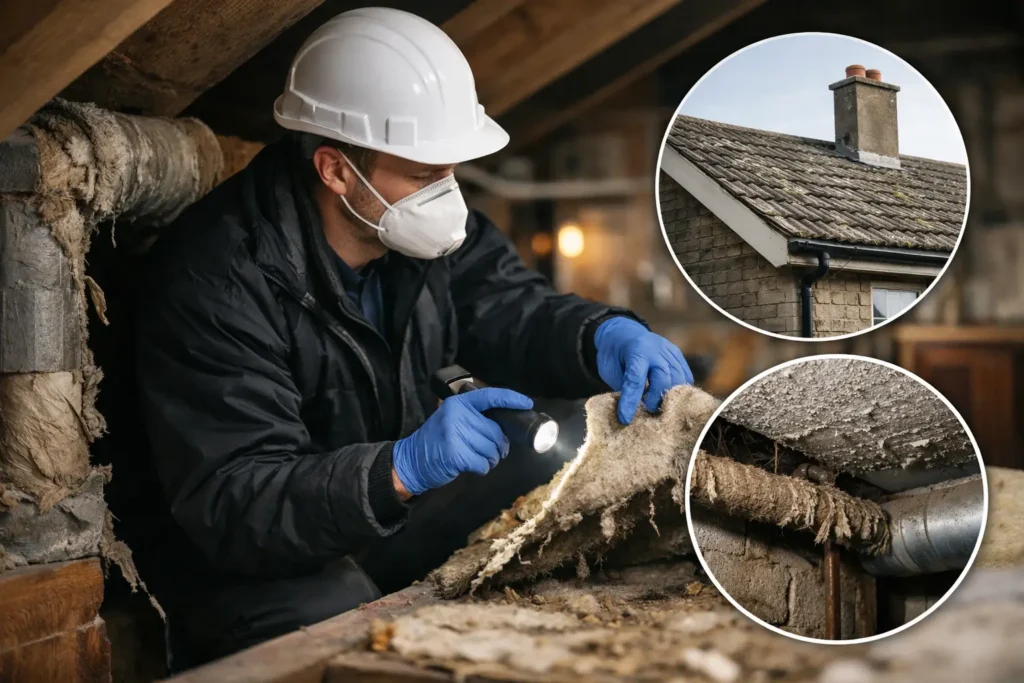
A cracked garage roof, a dated textured ceiling or old vinyl flooring can quickly raise a worrying question during renovation. Home asbestos locations are often not obvious, because asbestos was added to many everyday building materials for strength, insulation and fire resistance. The material itself is not always dangerous when in good condition and left undisturbed. The risk rises when it is drilled, cut, sanded, broken or removed without the right controls.
For homes built or refurbished before 2000, the safest approach is to pause before work begins. A professional survey or sample can identify the material, assess its condition and give you a clear plan for managing or removing it. That prevents a small repair job becoming a contamination issue.
Why asbestos can be found in ordinary parts of a home
Asbestos was widely used in UK construction for decades. It appears in products that were designed to resist heat, wear and moisture, from roof sheets and cement panels to pipe coverings and decorative finishes. This means it may be present in a property without being immediately visible.
Age is a useful clue, but it is not proof. A newer extension may contain reused materials, while an older home may have had asbestos-containing products removed long ago. Colour, pattern and texture are not reliable ways to identify asbestos either. Laboratory analysis of a correctly taken sample is the dependable way to confirm whether a material contains it.
Condition matters as much as location. Intact asbestos cement is generally lower risk than damaged insulation board or loose pipe lagging. However, any material can release fibres if it is disturbed. Avoid assuming that a low-risk material is suitable for DIY removal.
Common home asbestos locations
Garage roofs, sheds and outbuildings
Corrugated grey roof sheets on garages, sheds and lean-tos are among the most familiar asbestos-containing materials found at homes. Asbestos cement was durable and inexpensive, so it was commonly used for roofs, side panels, soffits and rainwater goods.
Weathering does not automatically mean a roof is unsafe, but broken edges, cracks, moss growth and plans for demolition all need careful consideration. Never pressure wash, drill through or cut old cement sheets. These actions can damage the surface and spread debris around the garden or driveway.
A planned garage-roof removal allows the work area to be controlled, sheets to be handled carefully and waste to be transported for correct disposal. If the garage is unstable or due to come down, removal and demolition should be planned together rather than treated as separate jobs.
Textured coatings and Artex ceilings
Textured decorative finishes were applied to ceilings and walls in many properties. Some older coatings may contain asbestos, often in low quantities, but the hazard can increase significantly when the surface is scraped, sanded, drilled or stripped during redecoration.
A ceiling may look sound enough to paint over, and that can sometimes be a practical management option where the coating is undamaged. It depends on the future use of the room. If you intend to install downlights, move wiring, remove a partition or create a smooth plastered ceiling, arrange testing before the work starts.
Do not dry-sand a textured ceiling to flatten it. Even a small patch can create unnecessary dust if the coating contains asbestos.
Floor tiles, adhesives and vinyl sheet flooring
Older floor tiles can contain asbestos, particularly certain vinyl tiles and the black adhesive sometimes found beneath them. Sheet vinyl flooring may also have an asbestos-containing backing. These materials are regularly uncovered when homeowners replace kitchen, bathroom, hallway or utility-room floors.
Tiles that are firmly bonded and undamaged may be managed in place until refurbishment is required. Problems often begin when someone tries to lift brittle tiles with a chisel, grinds the adhesive or uses a power tool to prepare the subfloor. If the flooring is old and its history is unclear, have it assessed before removing it.
This is especially relevant where multiple layers of flooring have built up over the years. What appears to be a straightforward laminate replacement can uncover much older materials underneath.
Pipe insulation, boiler cupboards and airing cupboards
Older heating systems can contain asbestos in pipe insulation, lagging, gaskets, rope seals and surrounding panels. Pipe lagging is a higher-priority concern because it can be more friable, meaning it may break down and release fibres more readily than solid cement products.
Look carefully, without touching, around old boilers, hot-water cylinders, airing cupboards, service ducts and under-stair pipework. Fluffy, wrapped or damaged insulation should not be handled. If a plumber needs to alter pipework or a boiler is being replaced, tell them about any suspected asbestos before work begins.
A survey can identify materials in areas where tradespeople may need access, allowing work to be organised safely and without last-minute delays.
Fire doors, panels and cupboard linings
Asbestos insulating board was used for fire protection in some properties. It may be found in or around old fire doors, partition walls, boxing, heater cupboards, ceiling panels and service risers. It can resemble ordinary board, which is why visual checks are not enough.
Board that is drilled, damaged, crumbling or being removed as part of a layout change needs specialist attention. Do not remove a panel simply to see what is behind it. Keeping the material intact while its type and condition are assessed is the safer choice.
Roof spaces, eaves, soffits and external fittings
Asbestos can also appear in less frequently visited areas: loose-fill insulation in roof spaces, cement soffits, fascia boards, flue pipes, gully hoppers and old rainwater downpipes. Accessing a loft for insulation upgrades, electrical work or storage can expose materials that have not been checked for decades.
Take particular care with any loose or fluffy insulation. Do not enter the area, move boxes or attempt to bag the material yourself. Restrict access and arrange an assessment. For external components, avoid drilling into soffits or cutting old flues before confirming what they are made from.
What to do if you suspect asbestos at home
The first action is simple: stop work and leave the material where it is. Close the door to the room or keep people away from the area if there is visible damage or dust. Do not sweep, vacuum with a household machine or collect fragments in a bin bag, as this can spread contamination further.
Next, consider what is planned. A sound material that will remain untouched may only need recording and monitoring. If you are selling a property, arranging a repair, upgrading electrics, replacing a roof or starting a renovation, testing or a survey gives you the information needed to proceed safely.
Photographs can help an asbestos specialist make an initial assessment, particularly for accessible garage roofs, floor tiles and visible panels. They cannot replace sampling where a definite identification is required, but they can help determine the right next step and provide a quicker estimate.
When a survey, sample or removal is the right choice
These services serve different purposes. Sampling answers a focused question about one material, such as a ceiling coating or tile. A survey is more suitable before wider refurbishment, demolition or commercial maintenance work, when several rooms or hidden service areas may be affected.
Removal is not always automatically required. It becomes the sensible option when asbestos-containing material is damaged, likely to be disturbed, preventing essential repairs or creating a risk in an occupied area. The method should suit the material and setting. Careful planning, protective equipment, controlled handling and a fully enclosed work area where needed all help keep disruption to a minimum.
Waste also matters. Asbestos must be packaged, transported and disposed of correctly. Leaving this part to a competent contractor means the job is managed from assessment through to final disposal, rather than creating an unsafe storage problem at home.
Plan before the first tool comes out
The most costly asbestos problems usually start with an assumption: that a roof sheet is only cement, a ceiling is only texture, or a tile is only vinyl. A short pause before renovation can protect your household, your tradespeople and the value of the project.
If you are concerned about a suspected material in your home, North East Asbestos Removal can assess the situation, provide a free estimate and advise on the safest practical route. Clear information before work begins is often the quickest way to get the job done right.