
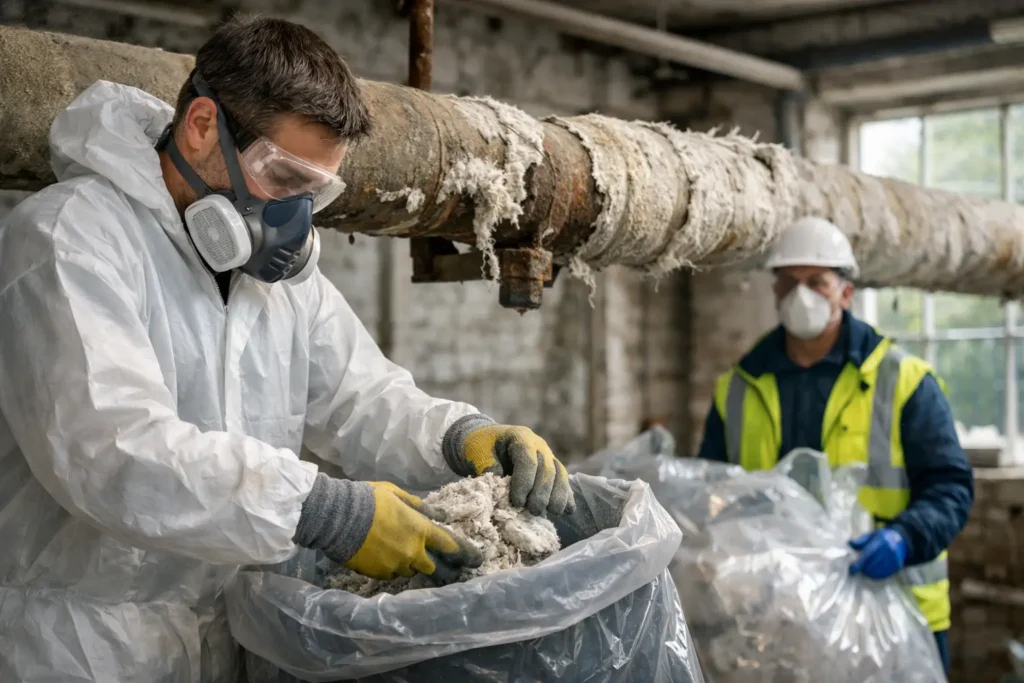
Pipe lagging can look like an ordinary wrapping around old heating pipes, but it is one of the asbestos materials that needs the greatest care. If you are asking how to dispose of asbestos pipe lagging, the safest answer is not to remove, bag or take it to a tip yourself. Stop work, keep people away from the area and arrange for a competent asbestos contractor to assess the material and manage its removal and disposal.
Pipe insulation was widely used in older buildings to retain heat and reduce condensation. It may be found in boiler rooms, basements, airing cupboards, service risers, lofts, under-floor voids and former commercial premises. Because lagging can be soft, crumbly and easily damaged, disturbing it may release asbestos fibres into the air. A careful, planned response protects your household, tenants, staff and tradespeople while keeping the property project moving.
Why asbestos pipe lagging needs specialist disposal
Unlike hard asbestos cement sheets, pipe lagging is often a friable material. That means it can break apart under light pressure, particularly where it has aged, been exposed to water or has already been cut during previous plumbing work. Its appearance varies too. It may be a pale fibrous coating, a rough plaster-like layer, fabric wrap or moulded insulation sections beneath paint or tape.
You cannot identify asbestos reliably by sight alone. Some non-asbestos insulation can look similar, while pipe lagging may contain different asbestos types and concentrations. Sampling by a competent professional provides the clarity needed before work begins. Until a result is available, treat suspicious insulation as if it contains asbestos.
The risk is not simply the presence of the material. Asbestos becomes hazardous when fibres are released and breathed in. Drilling, sawing, stripping, sweeping debris or pulling insulation from a pipe can turn a contained issue into contamination of the room, adjacent spaces and clothing. That is why disposal starts with preventing disturbance, not with finding a bin bag.
What to do when you find suspected pipe lagging
If a renovation, boiler replacement or leak repair exposes suspicious pipe insulation, pause the work immediately. Ask tradespeople to leave the material untouched and prevent others from entering the area. Do not brush debris up, use a domestic vacuum cleaner or attempt to cover damaged lagging with tape as a permanent solution.
If possible, close the door to the room without creating draughts or handling the material. Where lagging is in a shared commercial area or a rental property, restrict access and notify the responsible property manager. Avoid moving stored belongings through the area until it has been assessed.
Photographs can help an asbestos contractor understand the likely scope of work before attending, provided they can be taken from a safe distance without leaning over, touching or disturbing the insulation. Include an image showing the wider location, such as the boiler cupboard or plant room, as well as a clear image of the suspected material. This can support a quicker estimate and help the contractor plan the right controls.
Do not put pipe lagging in household waste
Asbestos waste cannot go in a household wheelie bin, builders’ skip or general commercial waste container. It must be packaged, labelled, transported and accepted through the correct waste route. Most household recycling centres do not accept this type of material from the public, and taking it there without checking can expose you and site staff to unnecessary risk.
Loose fragments, dusty insulation, contaminated wipes and disposable protective materials also need to be treated as asbestos waste. Leaving fragments in a garage, shed or cupboard until a later date is not a safe disposal method.
The correct process for asbestos pipe lagging removal
A professional process begins with identifying what is present and assessing its condition, location and the work required nearby. In some cases, a sample and laboratory analysis will be arranged first. In others, where the material is known or clearly identified, the contractor can plan removal straight away using the appropriate controls.
Pipe lagging is commonly classed as higher-risk asbestos work because of its friable nature. The exact legal requirements depend on the material, its condition, the removal method and the scale of the job. A competent contractor will determine whether notification, specialist controlled removal arrangements and air monitoring are required before work starts. This is particularly relevant in occupied homes, schools, shops, offices and blocks of flats where people may be close to the work area.
The work area is normally isolated using a fully enclosed working area or other suitable containment measures. Warning signs, controlled access, protective equipment and carefully planned removal techniques reduce the chance of fibre release. The aim is to remove the lagging in a controlled condition, rather than break it up or strip it off quickly.
Once removed, asbestos waste is placed in approved, clearly marked packaging. It is then transferred by an authorised carrier to a permitted hazardous-waste facility. A waste consignment note records where the material came from and where it has been taken. Keep a copy with your property records, especially if you are a landlord, commercial dutyholder or preparing a property for sale.
Can asbestos pipe lagging ever be left in place?
It depends on its condition and whether upcoming work will disturb it. Sound, sealed lagging in an inaccessible area may sometimes be managed in place rather than removed immediately. This is not a decision to make from appearance alone. It requires an asbestos survey or assessment, a clear record of the material and a management plan that prevents accidental disturbance.
Removal is usually the more practical option if lagging is damaged, deteriorating, exposed in a frequently used area or likely to be affected by plumbing, heating, electrical or refurbishment work. For example, replacing an old boiler may require access to pipe runs that have been untouched for decades. Finding out about the lagging before the installation date avoids costly delays and protects the heating engineer.
Encapsulation can be considered in limited circumstances, but it is not a shortcut around poor condition or planned disturbance. Any protective coating or enclosure must be suitable for the environment and should be part of a professionally assessed management approach.
What affects the cost and timescale?
The price of asbestos pipe lagging disposal is based on the risks and controls needed, not simply the length of pipe. A short section in an empty, accessible boiler room may be more straightforward than a larger area in a tight loft or occupied block of flats. Damage, contamination, difficult access, the need for enclosure, required notification periods and disposal volumes can all affect the quotation.
A clear quotation should explain the scope of removal, waste handling and disposal, as well as any testing, survey work or clearance arrangements needed. Be cautious about quotes that promise to remove soft pipe insulation immediately without asking where it is, how much is present or whether it has been disturbed. Those details matter because they determine how the job can be completed safely and lawfully.
For homeowners and small businesses across the North East and Yorkshire, North East Asbestos Removal can assess suspected pipe lagging, plan the work and manage collection through to final disposal. Providing photographs and a brief description of the location can help obtain a free estimate quickly.
Questions property owners often ask
Can I remove a small amount of asbestos pipe lagging myself?
Pipe lagging is not comparable to removing a small, intact asbestos cement item. Its potential to release fibres makes DIY removal a poor and unsafe choice, even where only a short section is visible. Arrange an assessment before any repair or renovation continues.
What if a pipe has leaked onto the lagging?
Water damage can make old insulation weaker and more likely to crumble. Do not attempt to dry, scrape or re-wrap it. Isolate the leak if this can be done without going near the lagging, then arrange professional advice. The contractor can assess both the asbestos risk and whether surrounding surfaces may need specialist cleaning.
Can plumbers work near suspected asbestos lagging?
Not until the risk has been assessed. Tell the plumber before they attend so they can avoid disturbing the material. A planned asbestos removal job before plumbing work is often quicker and safer than stopping an emergency repair midway through.
Finding pipe lagging does not have to derail your project. Leave it undisturbed, get it identified and let trained specialists take responsibility for the controlled removal, transport and disposal. That approach gives you a clean route forward and the confidence that the job has been done right.