
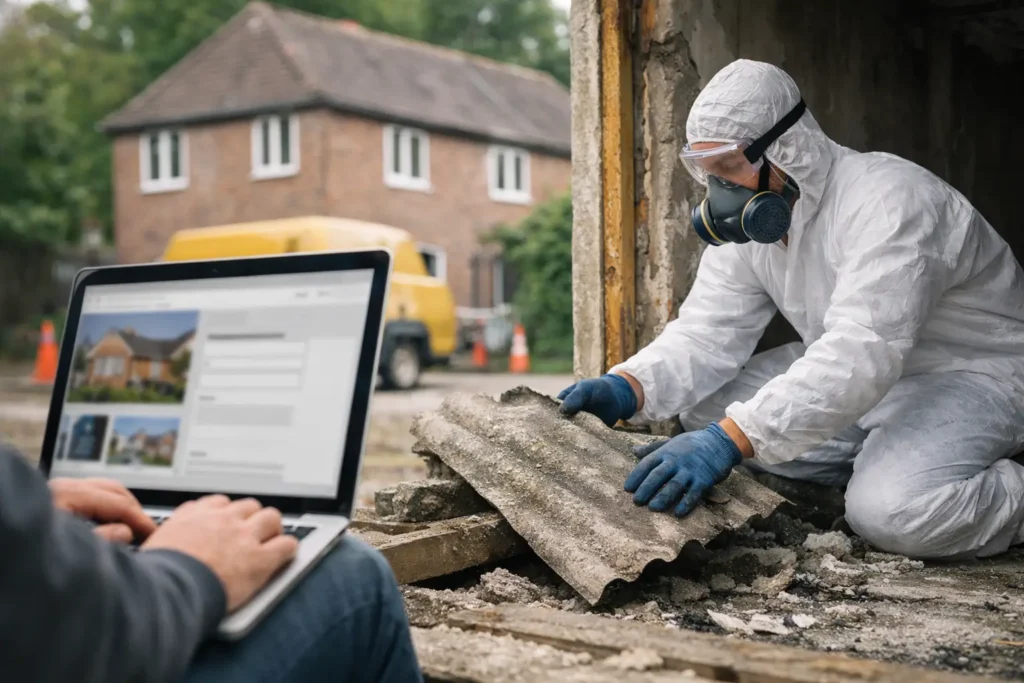
A garage roof panel, textured ceiling or old floor tile can look like a straightforward renovation job until asbestos is suspected. An asbestos removal quote online gives you a safe first step without disturbing the material, helping you understand the likely work involved before arranging a visit.
For homeowners, landlords and property managers, the best online quote process is quick but never careless. Clear photographs and accurate details allow a specialist to assess the likely material, access requirements and removal method. Where photographs cannot confirm what is present, testing or a survey may be needed before a fixed price can be given.
What an asbestos removal quote online should cover
A useful estimate is more than a price for taking material away. It should give you confidence that the work will be planned, contained, transported and disposed of correctly.
For smaller, clearly identifiable jobs – such as a detached garage with asbestos cement roof sheets – photographs can often provide enough information for an initial estimate. The contractor will normally need to see the full structure, the roof condition, the access route and the surrounding space. A close-up of a single panel rarely tells the whole story.
For more complex work, an online request should lead to the appropriate next step. Pipe insulation, damaged boards, loose debris, ceiling coatings and materials inside occupied commercial premises may require sampling, a survey or an on-site assessment. That is not a delay for its own sake. It prevents assumptions being made about a hazardous material and ensures the scope of work is right from the start.
A clear quote should explain whether it includes site preparation, enclosed working where required, removal, waste packaging, transport and final disposal. If demolition is part of the project, it should also state what structure or materials are included and what will remain afterwards.
The details that make a quote more accurate
Photographs are one of the quickest ways to begin, provided they are taken safely. Do not climb onto a roof, enter a confined loft or move debris to get a better image. Take pictures from ground level or a safe, stable position, and do not drill, cut, scrape or clean suspected asbestos before requesting advice.
Include the property type and the exact location of the material. For example, say whether the material is on a garage roof, inside a utility room, below vinyl flooring, around pipework or on a ceiling. Mention its condition too. Intact sheets and tiles can require a different approach from cracked, weathered or broken materials.
It also helps to describe access. A rear garage reached through a narrow alley, a roof above a conservatory, or ceiling work in a furnished room can affect planning and cost. Contractors need to consider how workers and waste can move through the site safely while protecting the rest of the property.
For landlords and commercial customers, include any practical restrictions: tenant occupancy, trading hours, shared entrances, school-term dates or planned refurbishment schedules. The aim is to arrange the work with as little disruption as possible, not simply to fit it into the first available slot.
Useful photographs to provide
If it is safe to do so, send wide shots showing the whole affected area, closer images of the surface or material, and pictures of access points such as gates, paths, stairs or corridors. A photograph showing nearby obstacles – such as a fence, conservatory, parked vehicles or neighbouring property – can be just as useful as the material itself.
For a garage roof, include all elevations where possible, the internal view if it can be seen without entering an unsafe area, and any broken sheets or fallen pieces. For floors and ceilings, show the room size and any fixed fittings that may need protection or temporary removal.
Why asbestos removal prices vary
There is no responsible single price for every asbestos job. The material type, quantity, condition and location all matter, as does the level of control needed to keep people and property protected.
An accessible asbestos cement garage roof may be relatively straightforward to remove if it is intact, detached from the house and has clear external access. The price can increase where sheets are damaged, access is restricted, the garage requires demolition, or waste must be carried a significant distance by hand.
Indoor work can involve further preparation. Removing an Artex ceiling, floor tiles or pipe materials may require rooms to be cleared, work areas to be enclosed and surfaces to be protected. In occupied premises, the contractor must also plan around residents, staff, customers or other trades.
Waste is another major part of the cost. Suspected asbestos should not be placed in a household bin, broken up for easier transport or taken to a general waste site. Proper collection, packaging, secure transportation and disposal are essential parts of the job, not optional extras to be added later.
Estimate, survey or testing: which do you need?
An online estimate is often the right starting point when the material and the task are reasonably clear. It allows you to share information quickly and decide whether to proceed with a booked assessment or removal date.
Testing is appropriate when a material cannot be reliably identified from its appearance. Several building products can look similar, particularly ceiling coatings, old adhesives, insulation products and boards. A sample analysed through the right process replaces guesswork with a clear result.
A survey is usually needed when a property is being refurbished, demolished or managed as a commercial building. It identifies asbestos-containing materials that could be disturbed by planned works and helps the duty holder manage the risk. The right option depends on what you are planning to do, how much of the building is affected and whether the material is accessible.
If you are unsure, describe the planned work in your online request. Saying, “We are replacing the bathroom ceiling” or “The garage is being demolished before an extension” gives the specialist the context needed to advise on the safest route.
Questions to ask before accepting a quote
A low figure may be tempting, especially when a property sale or renovation deadline is approaching. But asbestos work should be compared on scope and safeguards, not price alone. Ask what preparation is included, how the area will be controlled, who is responsible for waste from collection to disposal, and whether the price covers all material shown in the photographs.
You should also ask what happens if the material differs from the original description or if hidden issues are found once work begins. A professional contractor will explain the process plainly rather than promise certainty where the available information is limited.
Timescales matter, but they should be realistic. A quick assessment can often be arranged for urgent situations, while more involved projects need proper planning. If the material is damaged or has been disturbed, explain this at the outset so the response can be prioritised appropriately.
Preparing while you wait for advice
The safest action is usually to leave suspected asbestos alone. Keep children, pets, tenants and tradespeople away from damaged material where practical. Avoid sweeping dust, using a domestic vacuum cleaner, pressure washing roof sheets or carrying debris through the property.
If renovation work is due to start, pause work in the affected area until the material has been assessed. This protects everyone involved and avoids turning a manageable job into a larger clean-up operation. Take a few clear photographs from a safe distance, note the dimensions if they can be measured without contact, then request an estimate.
North East Asbestos Removal can assess submitted images and job details, then recommend the right next step for removal, testing, collection or a survey. For properties across the North East and Yorkshire, that local, practical approach means you can move from concern to a properly planned solution without unnecessary delay.
A good quote should leave you clearer about what will happen next, not more worried about the material in front of you. Share what you can safely see, be open about the condition and access, and let trained specialists put the right controls in place before work begins.