
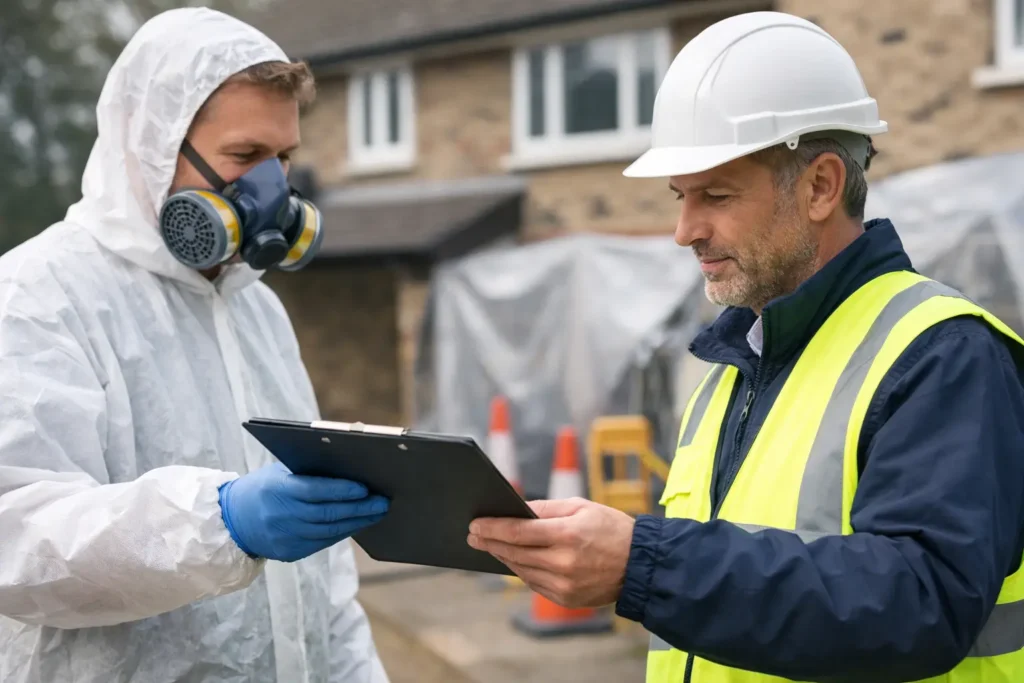
A cleared garage, ceiling or pipe run can look like the job is over. The paperwork is what confirms where the asbestos went, what was removed and, in higher-risk cases, whether the area can be used again. An asbestos removal certificate after work is often requested by homeowners, landlords and buyers, but it is not one single document issued for every asbestos job.
What you should receive depends on the material, its condition, the removal method and whether the work required formal clearance. Getting this right protects you if you are renovating, managing a rental property or preparing a building for sale.
Is there always an asbestos removal certificate after work?
No. The phrase is commonly used to describe several different documents, but the formal document people usually mean is a Certificate of Reoccupation. This is required after certain higher-risk asbestos removal projects, following a strict four-stage clearance process.
For many smaller domestic jobs, such as removing an intact asbestos cement garage roof, a few asbestos floor tiles or a carefully managed Artex coating, a Certificate of Reoccupation may not be required. That does not mean the job should end without evidence. You should still receive clear completion records and hazardous-waste paperwork.
The key point is that the documents must match the work carried out. A generic certificate that says little about the property, material or disposal route offers far less reassurance than a properly documented project file.
When a Certificate of Reoccupation is needed
A Certificate of Reoccupation is associated with work where asbestos fibres could present a significant risk and the area has been enclosed for removal. Before the enclosure is taken down and the space handed back, an independent analyst completes the four-stage clearance procedure.
This normally involves a preliminary check of the work area and enclosure, a thorough visual inspection for dust and debris, air monitoring where required, and a final assessment once the enclosure has been removed. Only when the area meets the required standard can the Certificate of Reoccupation be issued.
This certificate is especially relevant where work has involved friable asbestos-containing materials, insulation or other removal activities that need controlled enclosure and formal clearance. It provides evidence that the area has been checked before people return to it.
A competent contractor should explain before work starts whether formal clearance is expected. If it is, ask who will carry it out. Independence matters because the analyst should assess the completed work objectively, rather than simply sign off their own removal.
Documents to expect after asbestos removal
Even where a formal reoccupation certificate is not required, the end of the project should be documented properly. A useful handover pack may include the following records:
- A completion record describing the asbestos-containing material removed and the area of the property involved.
- A hazardous-waste consignment note showing that the waste was transferred and taken to an authorised disposal facility.
- Relevant survey, sampling or laboratory results that identified the material before removal.
- Photographs, where appropriate, showing the completed area and the condition left behind.
For landlords, property managers and commercial dutyholders, keeping these records with the asbestos register and maintenance information is sensible. It helps prevent contractors disturbing remaining asbestos during future repairs. For homeowners, it gives a clear answer if a buyer, surveyor or tradesperson asks what happened to a former garage roof, ceiling coating or floor covering.
Waste paperwork deserves particular attention. Asbestos waste must be packaged, transported and disposed of correctly. A verbal assurance that it has been taken away is not the same as a consignment note showing a recorded waste transfer. Keep the document somewhere secure with your property records.
What a completion certificate does and does not prove
Some contractors provide a certificate of completion after every job. This can be valuable, particularly when it identifies the address, date, material removed, work area and waste documentation. It shows that a defined removal task has been completed.
However, it is not automatically the same as a Certificate of Reoccupation. A completion certificate does not replace formal four-stage clearance where that clearance is required. Equally, asking for a reoccupation certificate after a low-risk removal where one is not required can create confusion and unnecessary cost.
The right question is not simply, “Will I get a certificate?” It is, “What documentation is appropriate for this material and this job?” A professional assessment before work begins should provide that answer.
How to check the paperwork is meaningful
Check that the documents identify your property and the specific work area, rather than using vague wording such as “asbestos removed”. Dates should align with the removal work, and the material should be described clearly. If sampling was undertaken, the result should state whether asbestos was identified and, where available, the type of material tested.
For a Certificate of Reoccupation, check that it records the clearance process and is issued by the analyst responsible for the assessment. Do not rely on a document that is undated, has no project details or cannot be connected to the work completed at your premises.
It is also worth checking the scope. Removing asbestos cement sheets from a detached garage does not certify that every part of the garage, loft or house is asbestos-free. A certificate or completion record applies to the stated area and material only. Other suspect materials should be left undisturbed until they have been assessed.
Why the paperwork matters when selling or letting a property
There is no need to panic if you discover asbestos was removed years ago and the original records cannot be found. Many older properties have changed hands without a complete file. But when work is being done now, good paperwork is a straightforward way to avoid uncertainty later.
Buyers may ask about a removed garage roof, former pipe insulation or damaged ceiling coating. A waste consignment note and completion record can show that the work was managed responsibly. For landlords, records support safe maintenance planning and demonstrate that asbestos concerns have been addressed rather than ignored.
If you are carrying out larger renovation, demolition or refurbishment work, an asbestos survey may be needed before contractors begin. A removal certificate only deals with completed work. It does not replace a survey of other areas that may be disturbed by the next stage of the project.
Arrange the right evidence from the start
The easiest time to discuss an asbestos removal certificate after work is before accepting a quote. Share clear photographs where it is safe to do so, explain your plans for the property and ask what records will be provided on completion. This allows the removal method, controls, clearance requirements and disposal arrangements to be planned properly.
North East Asbestos Removal manages projects from assessment and enclosed working through to transport and disposal, with clear communication at each stage. Whether the task involves a garage roof in the North East or a commercial property in Yorkshire, the aim should be the same: remove the identified hazard safely and leave you with records that make the next decision easier.
Keep every document with your property file. It may be a small administrative step after a difficult job, but it gives you practical proof that the work was handled responsibly and that the area can be dealt with confidently from here.